


7 Reasons Why Your Practice Must Have a Strong No-Show Policy

Authored by Sara Williams on July 24, 2025 · 5 minutes read



But First, What Do We Mean by a No-Show Policy?
A no-show policy includes a set of rules and penalties designed to handle missed appointments and help you get more patients at your practice. They could be missed on purpose or by accident. By formulating this policy, you can encourage your patients to keep their appointments. It will also increase the patients in clinic and lessen the impact of no-shows at your clinic. It’s a simple way to make sure your schedule runs smoothly!It’s Important in Healthcare Businesses
Medical clinics or medium-sized healthcare facilities run within a restricted cycle. Their success or failure usually depends on their revenue. When a patient fails to show up for an appointment, the provider not only loses that slot but also wastes the valuable time of their staff, including doctors, nurses, and other employees. This results in lost productivity and potential revenue for the healthcare facility. A no-show policy alerts patients that they will incur a charge or face consequences if they fail to attend their scheduled appointment. The specifics of these penalties vary according to each facility's policies. This stance would discourage the patients they get from missing their appointments and help their medical practice to grow.Protect Your Revenue
There are times when a patient doesn't timely appear for their scheduled visit or doesn't reschedule but expects their slot just because they “have an appointment”. It could be difficult to tackle for your in-house staff. Having a strong policy against these scenarios would not only inform patients about the expected consequences of a delay but also prepare the staff to appropriately respond to these incidents. Without a no-show policy, patients have no accountability whatsoever that will encourage them to be punctual for their appointments.Creating a Strong No-Show Policy
Wondering what sets apart a weak policy from a strong one? Versatility is the answer! A strong policy would be multi-dimensional rather than linear. It would address multiple issues that practices commonly face and consider the consequences of each of those situations. This approach ensures that all possible outcomes are taken into account. Here are some of the penalties you can consider while developing your policy.-
Straight Fee
-
Rescheduling
-
Cancellation
What Healthcare Facilities Can Do to Prevent Now Shows?
Call n Check! It is only good sense to do a reminder call for scheduled patients 24 hours before their appointment. This would save time and hassle for both parties and show how you care for your client’s health and well-being.Implementation is the Key
Making a policy is one thing and being able to implement it is another. As a medical provider, ensure that employees handling such cases are fully informed about policy regulations. This knowledge enables them to effectively guide patients through the necessary procedures. Another crucial tactic is to make no exceptions. No favoritism and no loose ends to get back to you. One should keep a clean reputation when it comes to client dealing.Remember, Customer Comes First
This rule applies no matter what market you are working in. It is important that you consider patient satisfaction when you are formulating a policy. Your patient and their well-being is always your top priority. Ensure that your guidelines and staff do not wrongly impose any penalties on your patients. Additionally, take steps to prevent the misuse of the policy against them by any means.Everybody Wins!
A strong no-show policy not only helps maintain your revenue cycle and prevents the waste of your employees' valuable time, but it also improves scheduling tracking. This ensures that your medical practice grows and your patients receive the treatments they need in a timely manner.How Our Schedulers Can Help You Avoid No Shows?
Growing a medical practice can be a complex challenge, given the multitude of tasks that need attention every day. Consider bringing on a professional who can expertly manage your scheduling and streamline your process cycle. This strategic move can simplify operations, making your practice more efficient and hassle-free. Allow our schedulers to handle the no-shows, freeing you to concentrate on delivering top-notch medical care to your patients. Our expert team of professionals is just a call away from helping you. For more information, please contact us by email or visit our website today.


More Related Posts

-

August 20, 2025
Practice Management5 Legal Mistakes Small Practices Make & How to Avoid Them
Running a small medical practice can be incredibly rewarding, but it also comes with its own set of unique challenges. One of the most crit...
-

July 24, 2025
Practice Management9 Reasons Why Credentialing is Important for Your Practice's Success
Credentialing may not be the most exciting part of running a medical practice, but it’s one of the most important. It’s the process of verif...
-

July 24, 2025
Practice Management7 Management Best Practices for Therapists to Improve Patient Care
As a therapist, balancing patient care, administrative tasks, and your own well-being can be overwhelming.
-

July 24, 2025
Practice Management7 Time-Saving Hacks to Streamline Administrative Processes for Your Healthcare Practice
Managing a medical practice goes beyond providing quality care—it requires smooth and efficient administrative processes. From scheduling to...
-
July 24, 2025
Practice ManagementAdvantages of having the Best Medical Scheduling Software for Your Practice
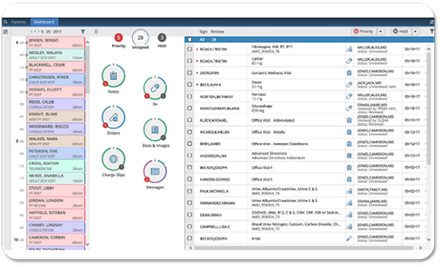
As the US population continues to rise, healthcare providers face increasing pressure to manage more patient appointments effectively. Tradi...
-

July 24, 2025
Practice ManagementDurable Medical Equipment (DME) Billing Services – An Overview
Durable Medical Equipment (DME) billing is a specialized area requiring expertise in HCPCS Level II codes and knowledge of insurance coverag...
-

July 24, 2025
Practice ManagementBest Medical Billing Software for Home-based Practice
Home-based medical billing offers healthcare providers independence, cost control, and flexible work options through HIPAA-compliant softwar...
-

July 24, 2025
Practice ManagementIn-house vs outsourced revenue cycle management: Which has the most success rate?
It's no wonder 2023 was the year many of you started seeing more gray hairs. One of our new clients summed it up perfectly: handling the fin...
-

July 24, 2025
Practice ManagementDifferences Between EHR And Practice Management Software?
Healthcare facilities have to use a lot of software options for digital transformation. And it can be indeed difficult to determine the diff...
-

July 24, 2025
Practice Management5 Revenue cycle solutions that make operations 2X more efficient
Around 20-30% of healthcare providers struggle with understanding where they are losing money in their practices? In the complex world of he...
-

July 24, 2025
Practice ManagementNew CPT Codes to Watch for in 2023, All You Need to Know
Doctors and healthcare providers, do you wonder how often CPT codes are updated every year? Well, you're in luck because we've got the lates...
-

July 24, 2025
Practice ManagementWhy is Medical Insurance Eligibility Verification Important?
Insurance eligibility verification is crucial for ensuring patients get the care they need while avoiding billing mistakes and extra costs....